


Article: 8-Week Thyroid Detox Protocol

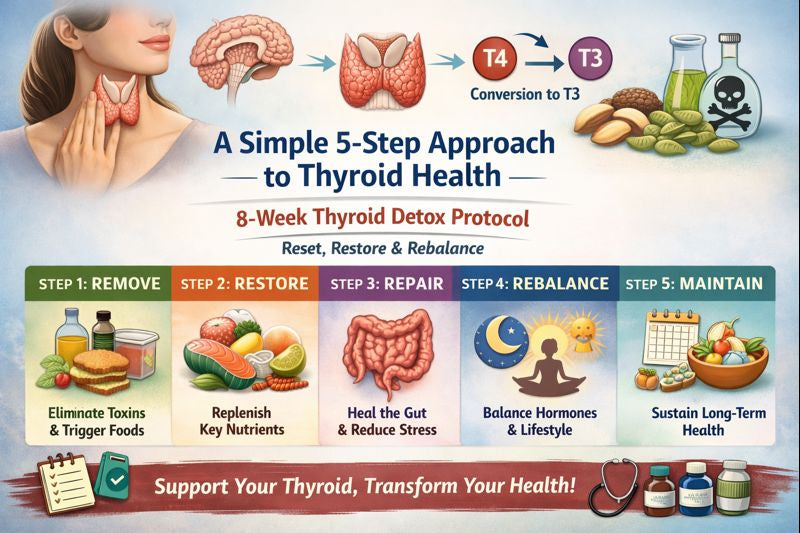
8-Week Thyroid Detox Protocol
A Simple 5-Step Approach to Thyroid Health
Thyroid health plays a critical role in overall wellness, yet it is often misunderstood or overlooked. This 8-week thyroid detox protocol is designed to reduce thyroid burden, support healthy thyroid hormone production, and optimize thyroid function using a structured, step-by-step approach.
By following these five phases over eight weeks, you’ll address common thyroid disruptors, restore essential nutrients, and create sustainable habits that support long-term thyroid health.
Common Thyroid Disorders and Their Symptoms
Before starting the protocol, it’s helpful to understand the most common thyroid disorders and how they can present in daily life.
Hypothyroidism
A condition where the thyroid produces insufficient hormones. Common symptoms include weight gain, chronic fatigue, cold sensitivity, hair thinning, constipation, dry skin, and low mood.
Hyperthyroidism
Occurs when the thyroid is overactive. Symptoms may include unexplained weight loss, heat intolerance, anxiety, insomnia, rapid heartbeat, irritability, and hair loss.
Hashimoto’s Thyroiditis
An autoimmune condition in which the immune system attacks the thyroid, often progressing to hypothyroidism. Symptoms can include neck swelling, fatigue, digestive issues, weight changes, and brain fog.
Graves’ Disease
An autoimmune disorder that typically leads to hyperthyroidism. Symptoms may include bulging eyes, nervousness, heat intolerance, sleep disturbances, and frequent bowel movements.
If any of these symptoms resonate with you, this protocol is designed to address underlying contributors and help restore balance.
How Thyroid Hormone Production and Conversion Works
Thyroid hormone regulation relies on a precise chain of communication between the brain and the thyroid gland.
The brain releases thyroid-stimulating hormone (TSH), signaling the thyroid to produce hormones. The thyroid primarily produces thyroxine (T4), which is largely inactive. For the body to use thyroid hormone efficiently, T4 must be converted into triiodothyronine (T3)—the active form that fuels metabolism, energy, and cellular function.
This conversion requires the enzyme deiodinase and critical nutrients such as selenium and zinc. When these nutrients are lacking, T4-to-T3 conversion may be impaired even if the thyroid gland itself is functioning.
Foods like Brazil nuts (selenium) and pumpkin seeds (zinc) help supply these essential cofactors.
Understanding Your Thyroid: The Body’s Metabolic Regulator
The thyroid is a small, butterfly-shaped gland located at the base of the neck, yet it has an outsized impact on nearly every system in the body.
The thyroid helps:
-
Regulate metabolism and energy production
-
Support hair, skin, mood, and body temperature
-
Coordinate with the brain via TSH signaling
-
Influence digestion, circulation, and hormone balance
When thyroid hormone production or conversion is disrupted, symptoms can emerge across multiple systems—often long before lab values flag a problem.
STEP 1: REMOVE (Weeks 1–2)
The first phase focuses on eliminating common thyroid disruptors from the diet, lifestyle, and environment.
Foods to Remove
-
Gluten
-
Industrial seed oils
-
Highly processed foods
-
Soy products
Environmental Toxins to Avoid
-
Plastic food containers (use glass or stainless steel)
-
Fluoride exposure (use filtered water)
-
Chemical household cleaners
How Toxins Disrupt Thyroid Function
Certain chemicals—including chlorine and bromine—compete with iodine uptake in the thyroid, impairing T4 production. Others promote inflammation or interfere with the conversion of thyroid hormones into their active forms.
Reducing toxin exposure helps remove obstacles that block thyroid signaling and hormone efficiency.
Heavy Metals and Chemical Disruptors
Heavy Metals to Avoid
-
Arsenic
-
Lead
-
Mercury
-
Cadmium
These metals can interfere with thyroid hormone production, conversion, and receptor sensitivity.
Industrial Compounds and Everyday Chemicals
-
PCBs (older electrical equipment)
-
Flame retardants
-
Phenols such as BPA
-
Parabens (commonly found in personal care products)
Reducing exposure gives the thyroid a clearer path to function optimally.
Hydration for Effective Detox (Weeks 1–2)
Hydration supports detoxification pathways by helping transport waste through the lymphatic system, liver, and kidneys.
Aim for 1.5–2 liters of filtered water daily, adjusting for activity and climate. Adding trace minerals or a pinch of mineral salt may support electrolyte balance during detox.
Testing for Heavy Metals and Environmental Toxins
Testing options to discuss with a qualified provider include:
-
Urine testing for heavy metals
-
Blood testing for recent or ongoing exposure
Professional guidance is important, as some toxins require specialized protocols for safe removal.
STEP 2: RESTORE (Weeks 2–4)
This phase focuses on replenishing nutrients required for thyroid hormone production and conversion.
Key Nutrient Sources
-
Selenium: Brazil nuts, sardines
-
Iodine: Seaweed, wild-caught fish
-
Zinc: Oysters, pumpkin seeds
-
Tyrosine: Eggs, turkey, almonds
-
Clean proteins: At every meal
-
Healthy fats: Avocado, coconut oil, olive oil
Herbal Support for Thyroid Health
Certain herbs may support thyroid balance when used appropriately:
-
Guggul (Commiphora wightii): May support iodine uptake and T4-to-T3 conversion
-
Lemon Balm (Melissa officinalis): Traditionally used to calm overactive thyroid patterns
-
Rosemary Extract: Contains rosmarinic acid, which may help modulate TSH signaling
Always consult a healthcare professional before using herbs, especially if taking thyroid medication.
Supplements and Thyroid Support
While whole foods are the foundation, targeted supplements may provide additional support:
-
Selenium
-
Zinc
-
Magnesium
-
Vitamin A
-
B Vitamins (especially B12)
-
Inositol
Supplementation should be personalized and monitored by a healthcare provider.
STEP 3: REPAIR (Weeks 4–6)
Gut health plays a critical role in thyroid hormone absorption and immune balance.
Daily Gut-Supporting Practices
-
Bone broth
-
Fermented foods (sauerkraut, kimchi)
-
Prebiotic fibers (sweet potatoes, onions)
-
L-glutamine-rich foods (grass-fed beef, cabbage)
Lifestyle Adjustments
-
Reduce stress before meals
-
Space meals 4–5 hours apart
Managing Stress for Thyroid Health
Chronic stress raises cortisol, which can impair T4-to-T3 conversion. Incorporating stress-reduction practices such as breathing exercises, meditation, walking, and improved sleep helps support thyroid balance.
STEP 4: REBALANCE (Weeks 6–7)
Focus on lifestyle habits that stabilize hormone rhythms.
Daily Habits
-
Sleep by 10:30 PM
-
Morning sunlight exposure
-
Gentle daily movement
-
Dry brushing
Weekly Additions
-
Infrared sauna (2x/week)
-
Deep breathing practices
Environment
-
Reduce EMF exposure in the bedroom
Why Sleep and Exercise Matter
Quality sleep supports hormone conversion, lowers cortisol, and allows endocrine repair. Moderate, consistent exercise improves thyroid hormone sensitivity and metabolic efficiency.
STEP 5: MAINTAIN (Week 8 and Beyond)
Shift into sustainable habits that support long-term thyroid health.
Ongoing Practices
-
Weekly meal prep
-
Monthly liver support (castor oil packs)
-
Detox baths
Monitoring
-
Quarterly thyroid testing
-
Seasonal protocol adjustments
Signs of Progress
Improvements may include:
-
Increased energy
-
Better temperature regulation
-
Improved hair, skin, and nails
-
Clearer thinking
-
Regular digestion
-
Stable mood
Tracking subtle changes helps fine-tune your approach over time.
Important Reminder
Always consult your healthcare provider before starting any new thyroid detox or health protocol—especially if you are taking thyroid medication or managing an autoimmune condition.
Feel empowered to take control of your thyroid health with this structured, evidence-informed protocol.
Explore our blog library for more thyroid health resources and education.